

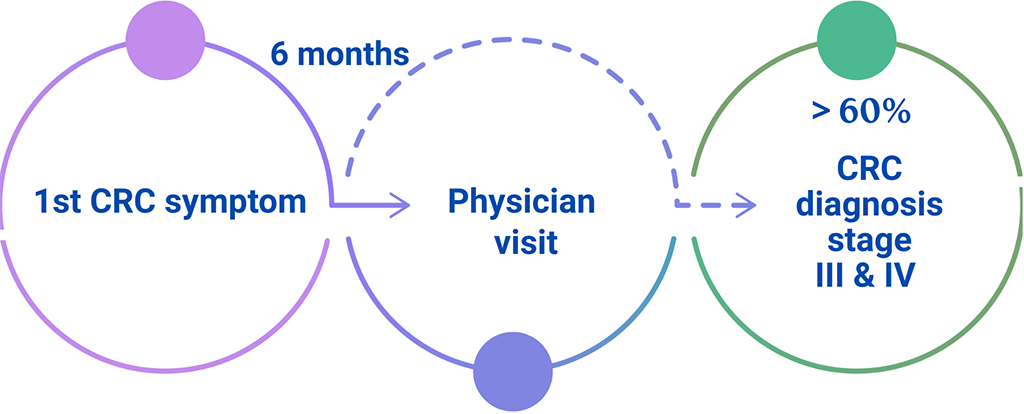
Usually, a patient with colorectal cancer will visit their gastroenterologist for a colonoscopy six months to one year after the initial onset of symptoms. This detail results in the majority of cases (>60%) being diagnosed at a fairly advanced stage (Stages III or IV), where the disease is difficult to manage and chemotherapy is often required.
In areas with a high incidence of CRC, systematic screening has significantly helped to:
- Reduce the incidence of the disease through early detection and removal of precancerous lesions, such as adenomatous polyps.
- Reduce mortality, as cancer is diagnosed at an early stage, when treatment is most effective.
- Improve cost-effectiveness, because early diagnosis reduces the need for expensive treatments in advanced stages.
The prevention of colorectal cancer is therefore crucial, as it allows for the early detection of the disease in its initial stages, significantly increasing the chances of cure.